How Qatar’s Online Economy is Reshaping Business
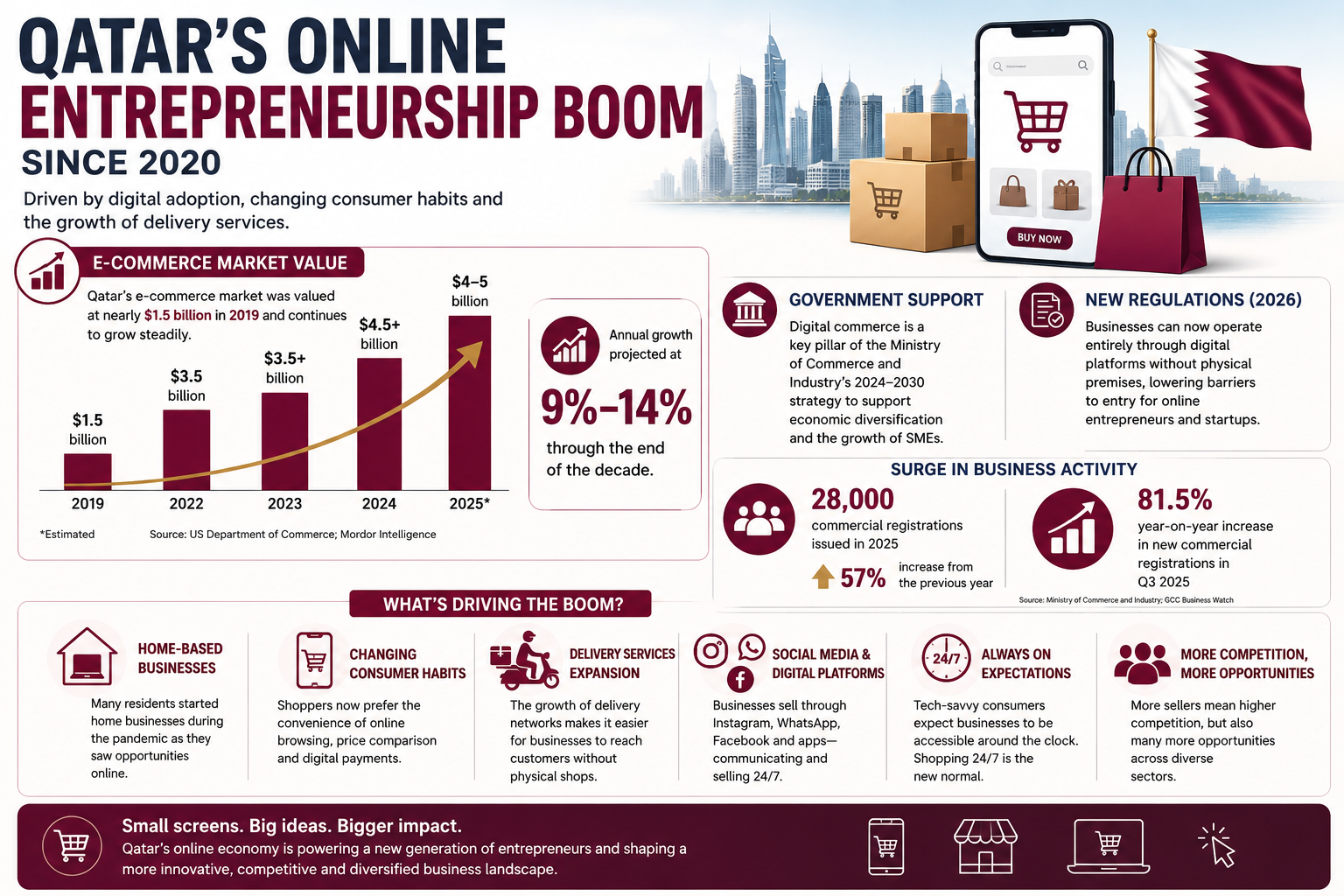
Over the past few years, Qatar has witnessed a remarkable transformation in the way businesses operate and consumers shop. What was once a market dominated by traditional retail stores has rapidly evolved into a thriving digital economy powered by smartphones, social media platforms, and delivery services. Since 2020, online entrepreneurship has expanded significantly, creating new opportunities for individuals, small businesses, and startups across the country.
The growth of Qatar’s e-commerce sector reflects broader global trends, but the country has developed its own unique digital landscape. According to market data, Qatar’s online commerce market was valued at nearly $1.5 billion in 2019. Since then, the sector has continued to grow steadily, with estimates suggesting it could reach between $4 billion and $5 billion in 2025. Forecasts indicate annual growth rates ranging from 9% to 14% throughout the remainder of the decade, highlighting the strong potential of digital business in the country.
One of the primary drivers behind this growth has been the shift in consumer behavior. The Covid-19 pandemic accelerated the adoption of online shopping as people sought safer and more convenient ways to purchase products and services. During periods of lockdown and social distancing, consumers became increasingly comfortable ordering groceries, clothing, household items, and even customized products through digital platforms.
As customers adapted to online shopping, entrepreneurs quickly recognized the opportunities available in the digital marketplace. Many residents who had extra time due to remote work arrangements or reduced working hours began exploring home-based businesses. These ventures ranged from handmade crafts and artwork to home bakeries and specialty food products.
Community markets and artisan events across Qatar have provided valuable platforms for these entrepreneurs to showcase their products. According to organizers of local handmade markets, a large number of vendors launched their businesses during the pandemic years. What initially started as hobbies or side projects gradually evolved into sustainable income sources as online demand increased.
Social media has played a crucial role in this transformation. Platforms such as Instagram, Facebook, and WhatsApp have become powerful sales channels for small businesses. Instead of investing heavily in physical storefronts, entrepreneurs can display products through digital catalogs, communicate directly with customers, and process orders entirely online. For many businesses, these platforms serve as virtual storefronts that are accessible around the clock.
The rapid development of delivery services has further accelerated the growth of online entrepreneurship. Reliable delivery networks allow businesses to reach customers across the country without maintaining a physical location. Entrepreneurs can now operate from their homes while offering professional delivery experiences comparable to larger retailers.
This shift has significantly lowered the barriers to entry for aspiring business owners. Starting an online business often requires less capital than opening a traditional store, making entrepreneurship more accessible to a wider range of people. Home-based sellers can focus on product development, customer service, and marketing while outsourcing logistics to delivery providers.
Government support has also contributed to the expansion of the digital economy. Recognizing the importance of online commerce, Qatar’s Ministry of Commerce and Industry has identified digital business as a key component of its long-term economic diversification strategy. The government’s focus on supporting small and medium-sized enterprises aligns closely with the growing popularity of digital entrepreneurship.
Regulatory changes introduced in 2026 represent another important milestone. New rules allow certain businesses to operate entirely through digital platforms without the requirement of maintaining physical premises. This development reduces operational costs and provides greater flexibility for startups and online entrepreneurs. By removing traditional business constraints, the regulatory environment is becoming increasingly supportive of innovation and digital-first business models.
The overall rise in business activity further demonstrates the strength of Qatar’s entrepreneurial ecosystem. Commercial registrations have increased dramatically in recent years, with nearly 28,000 registrations issued in 2025 alone. This surge suggests growing confidence among entrepreneurs and investors who see opportunities in both traditional and digital sectors.
Consumer expectations have also evolved. Today’s shoppers value convenience, speed, and accessibility more than ever before. Many customers prefer browsing products online, comparing prices, and making purchases from the comfort of their homes. Digital communication channels have become the preferred method for discussing customized orders, requesting product information, and completing transactions.
The appeal of online shopping extends beyond convenience. In a country where weather conditions can sometimes discourage outdoor activities, digital commerce offers a practical alternative. Customers can access products and services at any time of day without traveling to physical stores. This 24/7 accessibility has become an important competitive advantage for online businesses.
Despite the numerous opportunities, the growth of the online economy has also intensified competition. As more entrepreneurs enter the market, businesses must work harder to differentiate themselves. High-quality products, excellent customer service, creative marketing strategies, and strong digital branding are becoming essential for success.
Five years ago, online entrepreneurship was still relatively new for many residents. Today, the marketplace is far more crowded, with numerous businesses competing for customer attention. However, increased competition also reflects a healthier and more dynamic business environment. As the digital economy expands, new niches and opportunities continue to emerge.
Looking ahead, Qatar’s online economy appears well-positioned for sustained growth. Supported by favorable government policies, increasing consumer confidence, advanced delivery infrastructure, and widespread digital adoption, online entrepreneurship is becoming an increasingly important part of the country’s economic future. Small screens are indeed driving big business, transforming ideas into enterprises and creating new pathways for innovation, employment, and economic diversification across Qatar.